Blazers
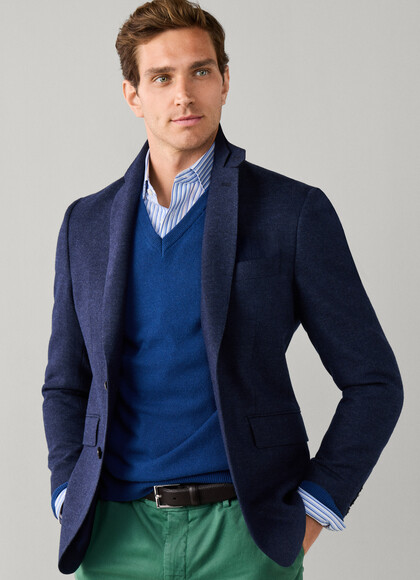
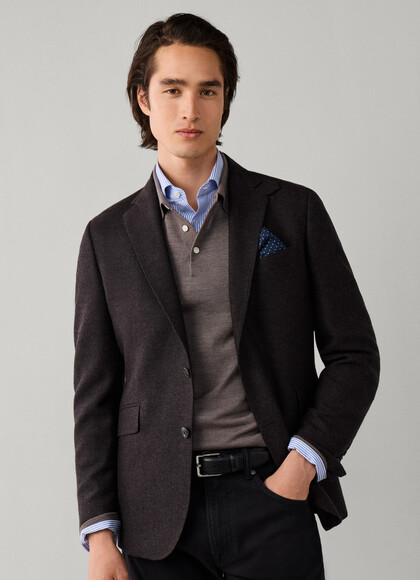
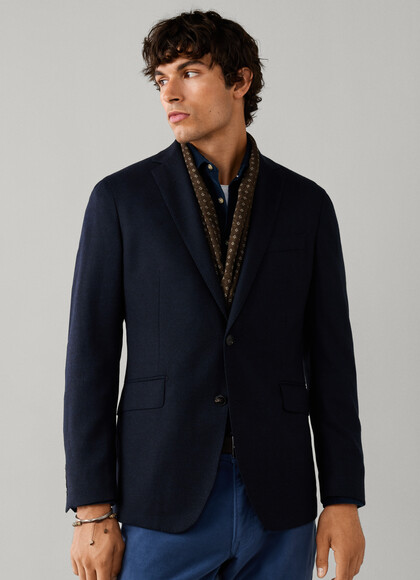
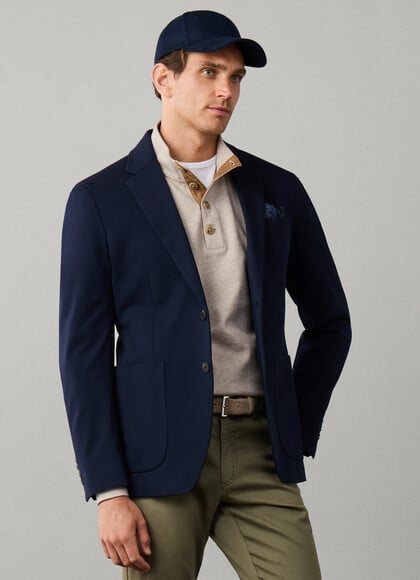
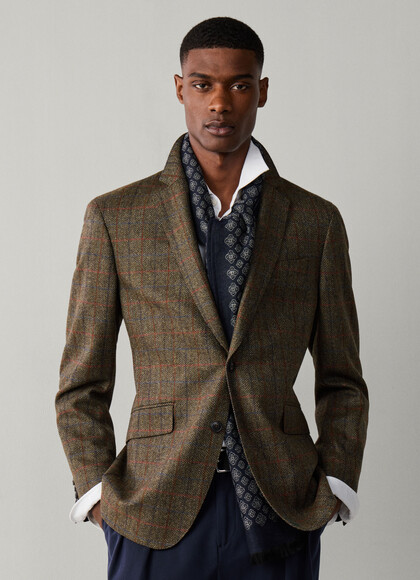
Men's blazers
Men's blazers are the single hardest-working piece in a smart-casual wardrobe, sharp enough for a client meeting and relaxed enough for dinner once the tie comes off.
Fabric and construction across the range
The collection spans wool flannel and tweed for the colder months through to lighter cotton and linen-cotton blends for summer. A half-canvas construction in the tailored styles allows the jacket to move naturally and the lapel to roll cleanly, following the same standard Hackett London has applied since opening its first shop on King's Road in 1983. Unstructured, unlined blazers strip out the internal canvas entirely for a softer, more casual shoulder line.
Choosing the right men's blazer for the occasion
A structured wool blazer with a half-canvas chest suits business and formal settings, while an unstructured cotton or linen blazer works better for warmer weather and genuinely casual dressing. Navy remains the most versatile single colour, working equally well over jeans or tailored trousers.
A navy wool blazer with an Oxford shirt and chinos for the office.
An unstructured linen blazer over a plain tee and jeans for a summer evening.
How to size a blazer correctly
A well-fitted blazer sits with the shoulder seam exactly at the natural shoulder line, since this is the hardest point to alter correctly if it's wrong. Sleeves should finish just above the wrist bone, showing a small amount of shirt cuff, and the jacket should close comfortably without pulling across the chest.
What's the difference between a blazer and a suit jacket?
A blazer is designed to be worn on its own, often in a different fabric or colour to any trousers, while a suit jacket is cut from the same cloth as its matching trousers and worn as a set.
Can a blazer be worn with jeans?
Yes, a navy or grey blazer pairs well with dark jeans for smart-casual settings, particularly when the blazer is unstructured rather than heavily padded.
How should a wool blazer be cleaned?
Dry cleaning is recommended, ideally infrequently, since over-cleaning wool breaks down the fibres faster than regular wear and airing between uses.